


Ski Resorts News
06/17/2020
Together with their Italian neighbours, Valtournenche, Zermatt is planning to co-host men’s and women's downhill races. For the first time in the history of the World Cup, a race will take place over a national border. The route is special for several reasons, including the fact that it will be the longest, highest downhill in the World Cup.

Due to the unexpected developments in the Lauberhorn downhill, there is considerable media interest in Zermatt’s World Cup plans.
During Spring 2020, with still both parties in court, it emerged that Wengen and Swiss Ski (the national Swiss federation) could not find an agreement on budget and TV rights for the event. Following this situation Swiss Ski has decided to cancel the Lauberhorn race for the season 2020/21. At present (May 2020) the official FIS calendar only states SUI, as location for the next race. Daniel Luggen, Zermatt’s Director of Tourism, has however urged restraint: “It is not our intention to detract from Wengen.” Quite the opposite: “This traditional race is a key part of the ski race circuit and is vital for Swiss tourism and skiing as a whole.”
However, this approach does not contradict the intention of the Zermatt – Matterhorn destination to press ahead with their own World Cup plans, using their position as a leading ski resort to launch a new, innovative project that will boost the sport of ski racing. Working with the Italian resort of Valtournenche, Zermatt is planning to host cross-border downhill races, starting in Switzerland and finishing in Cervinia in Italy. It’s a kind of race around the Matterhorn, starting at 3,899 metres on the Gobba di Rollin above the Klein Matterhorn to Laghi Cime Bianche at 2,814 metres. Franz Julen, Chairman of Zermatt Bergbahnen AG and the driving force behind the project, says: “Hosting a skiing World Cup underlines our forward strategy; we want this race and we will do everything to ensure that it happens.” He also refers to the Alpine Crossing project, a CHF 150 million cable car link between Switzerland and Italy, currently under construction and due to open in autumn 2021. This will really open up the race area.

The idea for the race came from the neighbouring community of Valtournenche: “In the history of the World Cup, there has never been a race over national borders,” says the CEO of Cervino S.p.a, Federico Maquignaz. The plan is to host a men’s and women's downhill race every November, at the start of the season. The difference in altitude over the 5 km route is more than 1,000 metres, making it the longest World Cup route, and the highest. Most of the route uses existing, scenic glacier pistes. No significant construction is required to create the route, no trees need to be felled and the altitude means that it is snow-sure.
The project is strongly supported in the Zermatt – Matterhorn destination, with the ski club, hotels, cable cars, municipal communities and the tourism organisation all firmly behind the plans and the project’s strong chances of financial success. Initial discussions have already taken place with the FIS, the Italian ski association Fisi and Swiss Ski; reactions have been positive and encouraged all those involved to press forward with the project. “If everything goes to plan, we will ready for our first race in autumn 2022,” says Luggen confidently.
Latest Resort News

Helmissimo: A New 10-Seater Gondola Set to Transform the 3 Zinnen Dolomites Ski Area
The 3 Zinnen Dolomites ski area in South Tyrol, Italy, is preparing for a major infrastructure upgrade ahead of the 2026/2027 winter season. The new HELMISSIMO 10-seater premium gondola in Versciaco will bring faster access to Monte Elmo (Helm), increase lift capacity and improve the overall skiing experience.
11/06/2026
La Clusaz Unveils New Six-Seater Balme Chairlift for the 2026–2027 Ski Season
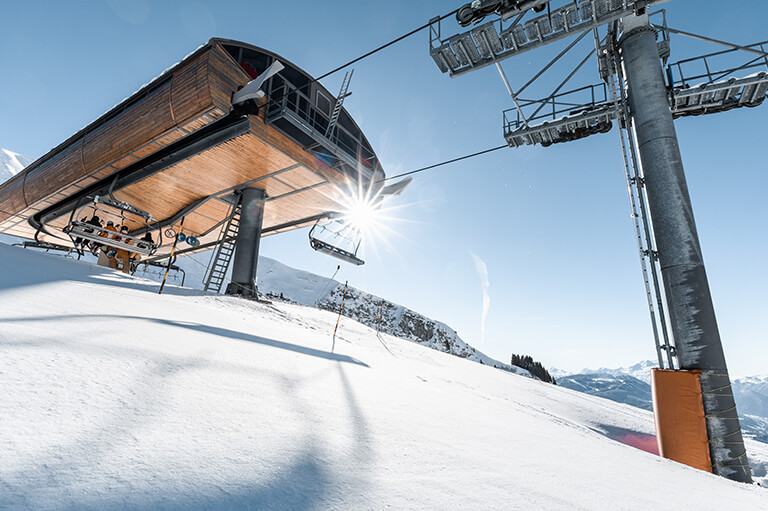
La Clusaz, one of the most popular ski resorts in the French Alps, is preparing a major upgrade to its mountain infrastructure with the installation of a brand-new six-seater detachable chairlift in the iconic Balme sector. The new lift, built by French manufacturer POMA, is set to transform access to one of the resort's most spectacular high-altitude skiing areas for the 2026–2027 winter season.
11/04/2026
L’Alpe du Grand Serre Saved: 30-Year Deal and Investment
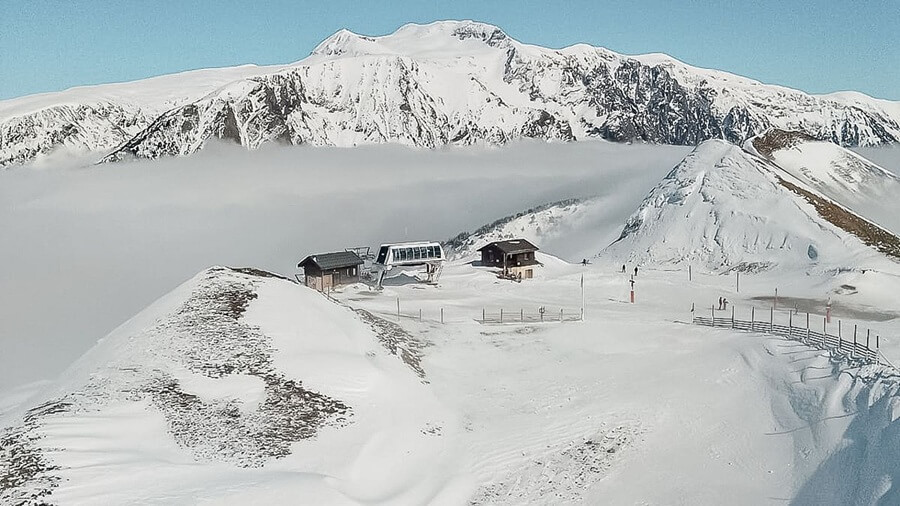
L’Alpe du Grand Serre, one of the oldest ski resorts in the French Alps, has been saved from permanent closure after signing a 30-year operating agreement with SATA Group. The deal, signed on 30 September 2026, secures the resort’s long-term future and paves the way for its reopening on 19 December 2026. With investments of up to €17 million planned, the resort near Grenoble is preparing for a new chapter in its history.
11/03/2026


